Belonging Matters...
As part of this series I'll be catching up with professionals who share a keen interest in all things related to belonging inclusion and psychological safety...

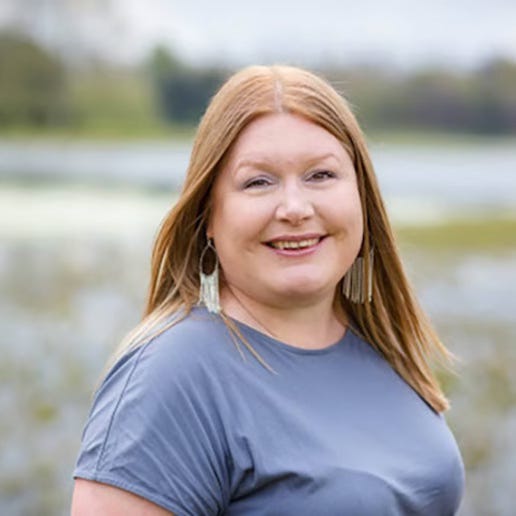
This week I’m joined by Hannah Wilson, leadership and development consultant, coach and trainer, Hannah has spent twenty years leading in schools and trusts, teaching hubs and universities. She now works independently. She is co- founder of #WomenEd and The Belonging Effect (formerly Diverse Educators.)
Q) Describe a time when you felt like you belonged?
A) I think it would be when I chose to go to college aged 16. I went to a church infant and junior school and an independent secondary school. I didn’t necessarily feel as though I belonged there.
When I arrived at college I had agency and autonomy. I had access to a carefully curated subject offer, I could choose what I wanted to learn and made brilliant friends. These are friendships that have lasted more than 30 years now, my ‘Devon’ girls… 4 of whom I would describe as really close friends. We would probably all have been described as ‘outliers’ in our secondary settings, but at college we found each other. It was a really liberating time, we were discovering new found independence.
That period of time was also fundamental in terms of shaping who I am today. My teacher, Sally exposed me to new ideas and new ways of thinking. Suddenly I was exposed to political, feminist ideology. I was introduced to vocabulary that meant I was able to articulate what I believed in. It was empowering. I went on to study post colonial literature at UKC as result - just as Sally had. She opened up doors for me. I had always had a strong sense of social justice, but that experience put me on a different trajectory.
Q) What strategies have you found helpful for building psychological safety in self and others?
A) I think I have always felt very ‘safe’. I appreciate that I benefit from the privilege that comes with identifying as a white cis- gendered woman. I’m tall, confident and extrovert. I was fortunate that, growing up I was taught that my voice mattered, but I quickly realised that wasn’t the case for everyone.
That said, I’m also quite comfortable being the outlier, or being ‘on the outside’ as result of ‘saying the thing that needs to be said’. I have a strong sense of identity and over time I’ve developed the ability and resilience required to do this work.
In terms of developing psychological safety for others, I’m keen to break down the myth that we don’t have the means or mechanisms. We might not always explicitly refer to it as psychological safety, but as educators we regularly co- construct and co- design routines and school culture with our young people. We can be intentional about it and make considered choices. We can encourage our young people to take risks, to learn from failure and to ask for help - we just need to be better at offering this to the adults we work with too!
Through my leadership work as a coach I’ve always encouraged teams to put a social contract in place and ideally to review this termly. When this is constructed in a neutral state, it enables us to hold space for others, to create equitable spaces and mediate.
I’m also keen to disrupt some of the existing mechanisms we might be using to provide safety, but are in fact limiting. Leaders are often quick to celebrate the fact they have an ‘open door’ policy. I’d encourage us to get curious about that. It’s a false proxy. How many people have walked through that door? With what frequency? How do they identify? Are they neurodivergent or underrepresented members of the school community? How intentional are we about making space for others? Can we co- construct better platforms and mediums to listen to employees?
Q) What advice would you give your younger self?
A)
Be true to yourself.
Listen to your gut.
You don’t need to compromise.
Listen more.
I’m a good listener, but I’m also a talker! Since leaving headship and becoming a coach, I’ve come to appreciate the art of listening more and more. In particular the way in which we hold courageous conversations. There’s a common misconception that this is an opportunity to ‘get everything off your chest.’ I prefer to reframe this as chance to create space for others to speak and an opportunity to provide an equitable space to listen and be heard.
Q) What does the sector need to consider when it comes to developing psychological safety?
Explicitly make this a priority.
A priority for all; for pupils and employees. In schools, ‘employees’ would need to include careful consideration of what that means for support staff, teaching staff, leaders and trustees.
In the 2021 Edurio report (supported by The Belonging Effect) captured school employee’s experience of equality, equity, diversity and inclusion. Specifically, it explored the perception gap that exists when those in a position of power and privilege assume that the rest of the team are enjoying the same experience as them. The challenge? Can those holding majority identities de- centre themselves when receiving feedback and demonstrate cultural humility?
If we’re serious about creating a strong sense of belonging, schools and the sector more widely will need to place a high premium on psychological safety and carefully consider the mechanisms and policies that enable leaders to enact this ‘on the ground.’